There’s a good chance you’re not sprinting, and it’s probably not because you don’t know how.
It’s because it feels aggressive, uncomfortable, and maybe even a little risky at this stage of your life.
For most people, sprinting is something they associate with a younger version of themselves, not something they believe belongs in their current routine.
That hesitation is exactly what makes it so important.
- Sprinting is high effort relative to your ability, not top speed, which makes it scalable for anyone.
- It directly trains power, coordination, and VO₂ max, the qualities that decline fastest with age.
- If you cannot sprint yet, that is the reason to build toward it, not avoid it.
Sprinting Needs a New Definition
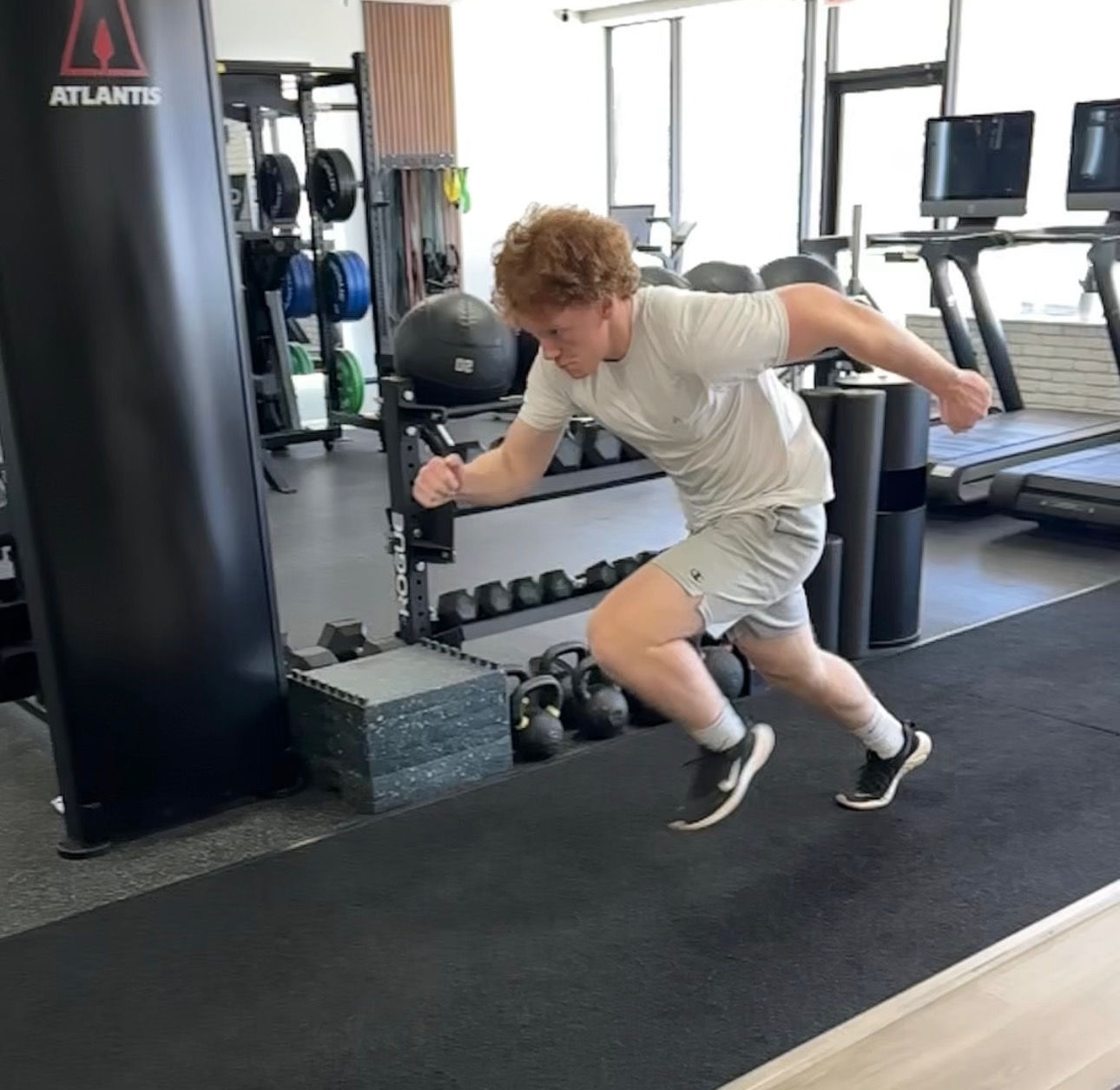
Before anything else, we need to redefine what sprinting actually means. It does not mean lining up on a track or trying to hit top-end speed like a competitive athlete. Sprinting is simply a short burst of high effort relative to your current capacity.
That could look like:
- Running fast for 10 to 20 seconds
- Pushing a sled with intent
- Sprinting on a bike or rower
- Walking quickly on an incline if that is your current ceiling
The common thread is not the exercise itself.
It is the intent behind it.
You are asking your body to move quickly and produce force at a level it does not experience during normal training.
What We Actually Lose As We Age
Most people think aging is about getting weaker or slower. That is part of it, but the more meaningful decline happens in qualities that are harder to see until they are gone.
Research shows that the following begin to decline earlier and more rapidly than most people realize:
- Power: Your ability to produce force quickly
- Fast-twitch muscle fibers: Your muscle fibers responsible for speed and explosiveness
- Elasticity: Your ability to absorb and re-use force
- VO₂ max: Measure of how well your body uses oxygen under stress
- Neuromuscular coordination: Measure of how efficiently your body moves
Studies have demonstrated that anaerobic power and fast-twitch fiber function decline faster than endurance as we age. This means you may still be able to go for a long walk or jog, but your ability to accelerate, react, or catch yourself begins to disappear first.
That loss is not just about performance. It is directly tied to increased injury risk, decreased confidence, and a gradual shift away from feeling capable in your own body.
Why Sprinting Changes That
This is where sprinting separates itself from almost everything else you are doing.
Sprint-based training, often studied as sprint interval training or high-intensity interval training, has been consistently shown in peer-reviewed research to improve multiple systems at once. These include:
- Significant improvements in VO₂ max, often matching or exceeding steady-state cardio
- Increases in muscle strength and peak power output
- Improved neuromuscular coordination and movement efficiency
- Enhanced metabolic health and insulin sensitivity
In older and general populations, high-intensity interval training has also been shown to improve functional capacity, cardiovascular health, and overall exercise tolerance.
What makes sprinting unique is that it does not isolate one quality. It forces your body to produce force quickly, coordinate movement efficiently, and manage high levels of oxygen demand at the same time. That combination is what drives meaningful change.
Most Training Lives in the Middle
The majority of people spend their time training at a moderate level. Moderate weights, moderate pace, moderate effort. While that has value, it does not challenge the upper limits of what your body is capable of doing.
Sprinting exposes those limits.
It pushes you into higher levels of output that most people rarely access, including:
- Rapid force production
- High-speed muscle contraction
- Full-body coordination under pressure
- Maximum cardiovascular demand
That is where adaptation happens. Not just improving what you can do comfortably, but expanding what your body is capable of when it actually needs it.
If You’re Avoiding It, That’s the Signal
If sprinting feels out of reach right now, that is not a reason to avoid it. It is actually useful information.
It often reflects limitations in:
- Strength, which affects your ability to produce and absorb force
- Mobility, which limits access to efficient positions
- Coordination, which impacts how well your body moves under speed
Ignoring those limitations does not solve them. It simply allows those qualities to continue to decline over time.
Whatever's been holding you back, we take the time to understand the whole picture and build a plan around you. A discovery call is a no-pressure place to start.
Book a Free Discovery Call →How We Build Toward It
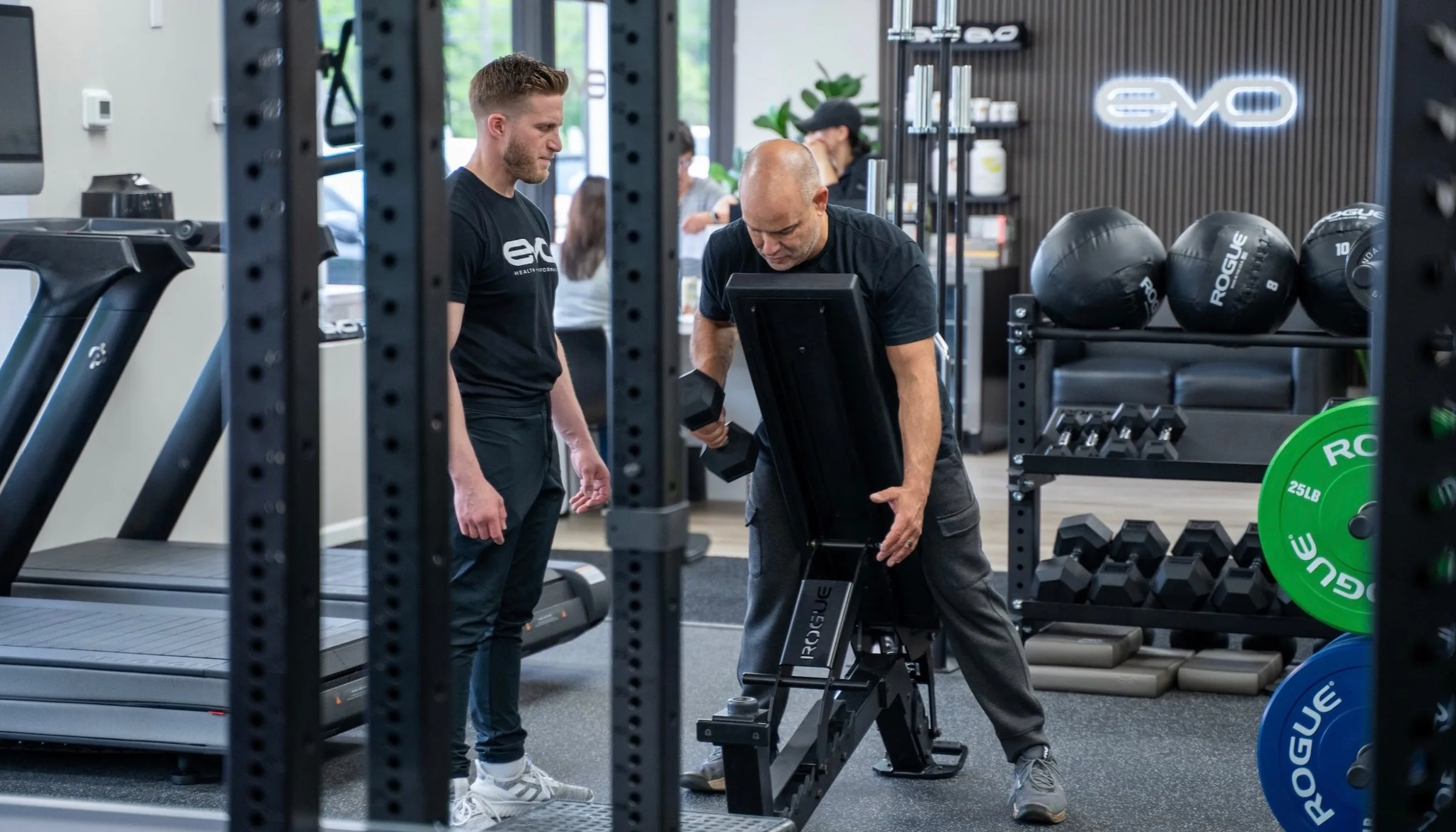
At EVO, our individualized approach to private training and semi-private training allows us to meet you where you're at.
Because sprinting is not the starting point.
It is the outcome of a well-structured progression.
We focus on building the foundation first:
- Mobility, so you can move into the positions required for efficient movement
- Strength, so your body can tolerate and control force
- Coordination, so movement becomes efficient and repeatable
From there, we introduce speed gradually. That might start with controlled accelerations, sled work, or short intervals that build confidence without overwhelming the system.
Over time, sprinting becomes less intimidating and more natural. It becomes something your body understands and can express safely.
This Is About Capability, Not Speed
Sprinting is not about becoming a faster runner. It is about becoming a more capable human being.
It shows up in real life as your ability to:
- React quickly when you lose your balance
- Generate force when you need to move fast
- Feel athletic instead of cautious in your movements
VO₂ max is one of the strongest predictors of longevity, and power is one of the strongest predictors of independence as you age. Sprinting is one of the few tools that directly improves both at the same time.
Where This Starts
You do not need to sprint tomorrow, but you should have a plan to get there.
Because the goal is not just to keep moving. The goal is to move with intent, speed, and confidence for as long as possible.
If you feel like your body is not capable of that right now, that is exactly where we come in. We meet you where you are, build the foundation, and guide you toward the level of performance your body is meant to have.
Book a Discovery Call here and let’s start building that process together.