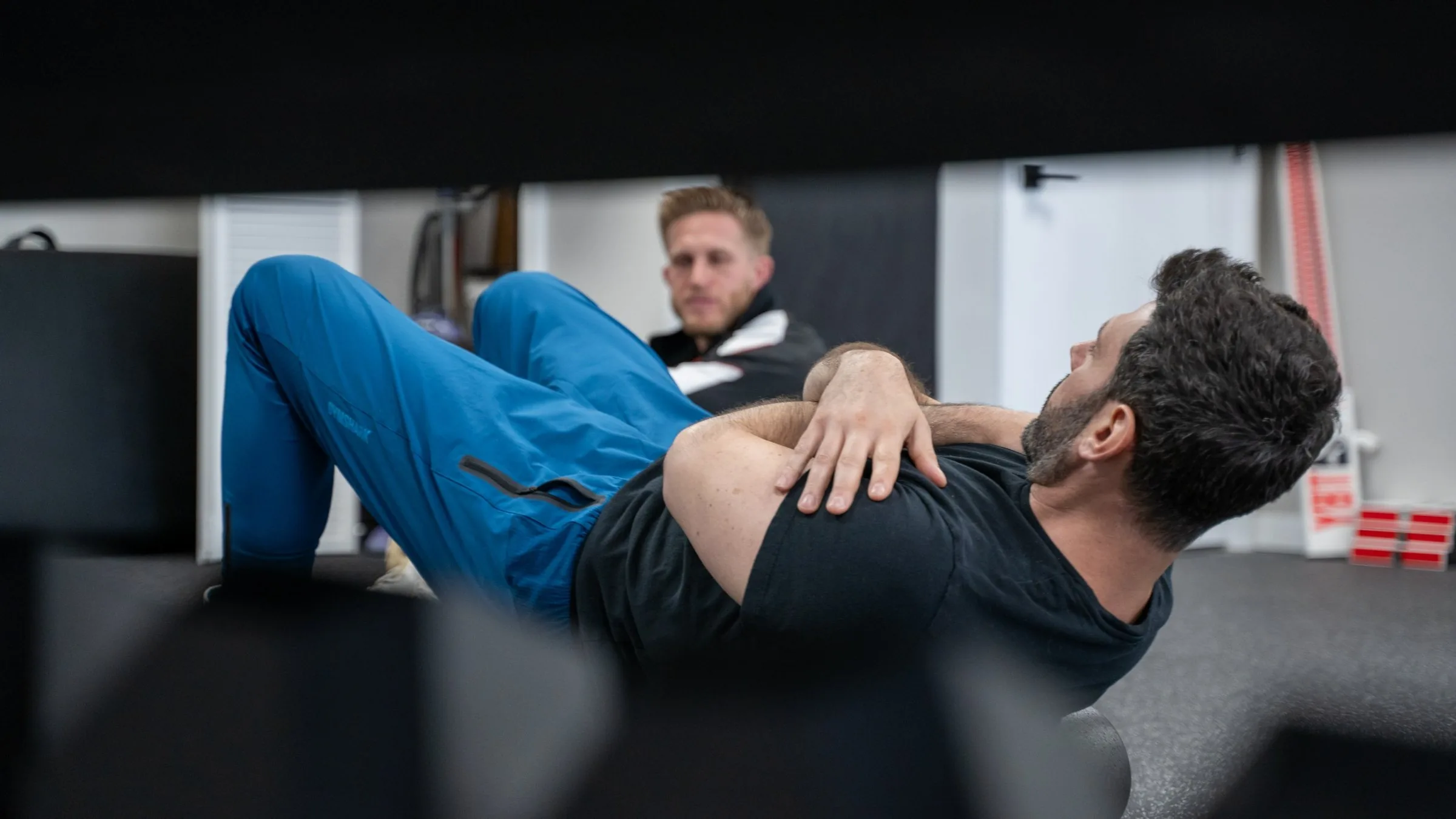
Muscle tension
Tissue holding tone it does not need, limiting what you can do and not letting go with stretching alone.
A tool we use throughout your plan. It normalizes muscle tension, activation and pain long enough to build new motion, new mobility and new load on top of it.
Dry needling uses a thin, sterile, solid filament needle placed into muscle. Nothing is injected, which is where the name comes from. It is not acupuncture: acupuncture comes from traditional Chinese medicine and works along meridians, while this is a Western, anatomy-led technique aimed at tissue your assessment pointed at.
It works in more than one way. Locally, it reduces tension in the tissue itself, which gives back range you could not reach. It also acts through the nervous system, on how pain is processed and how a muscle is being recruited. Most of the time the second one is what we are after.
Tissue holding tone it does not need, limiting what you can do and not letting go with stretching alone.
Range you cannot get to. Reducing the tension in the way gives us something to load, strengthen and then coordinate.
A recent injury where pain is the thing stopping you loading, tolerating volume, or getting through a session.
Pain that has been there a long time and become its own problem, where the nervous system side is what we are working on.
It is not a matter of putting a needle wherever it hurts and hoping. Which muscle, how it is being needled, how much, and whether it is used at all come out of the assessment: what that tissue is doing, what it may be protecting, and what we intend to do with the range or the relief once we have it.
We choose tools the way we choose exercises: off the assessment, to change one specific thing, never because they are on the menu. If needling is the right input for what is limiting you, we use it and then we load the area so the change holds. If it is not, we tell you.
The needle is far thinner than one used for a blood draw and most people barely feel it go in. You may feel a brief twitch or cramp as the muscle responds, which is normal and expected, then a dull ache. Soreness for a day is common, light bruising is possible, and you are encouraged to keep moving.
There is no dry needling appointment here. You book an evaluation, we find what is limiting you, and the plan decides which tools get used and when. Needling happens inside your hour with a Doctor of Physical Therapy, a few minutes of a session rather than an appointment of its own. The rest of the hour is the loading work.
Everything we do runs on the same sequence: regulate, activate, coordinate. Reduce what is limiting you right now, build the muscles that should be doing more and have not been, then teach your body to use that in real movement under real demand.
Needling is one of the tools we use to open that window, and it can be used at any point in the ten steps rather than at one fixed place in them. What it is never used as is a treatment on its own, because the change that holds comes from the loading that follows. It is performed by a licensed physical therapist with specific post-graduate certification in the technique, alongside soft tissue mobilization and pelvic floor therapy when the assessment calls for them.
The evidence on dry needling says close to what we say about it. Here it is.
An umbrella review of the existing systematic reviews found dry needling gives short-term pain relief across body regions and beats sham needling or no treatment, while concluding it is not clearly better than other treatments and that medium and long-term evidence is still thin.
Short-term pain relief is what this is for, so that finding is the one we would expect. The review is measuring the window. It is not measuring what you do inside it, and that is the part that decides whether the change holds.
Studies located via PubMed.
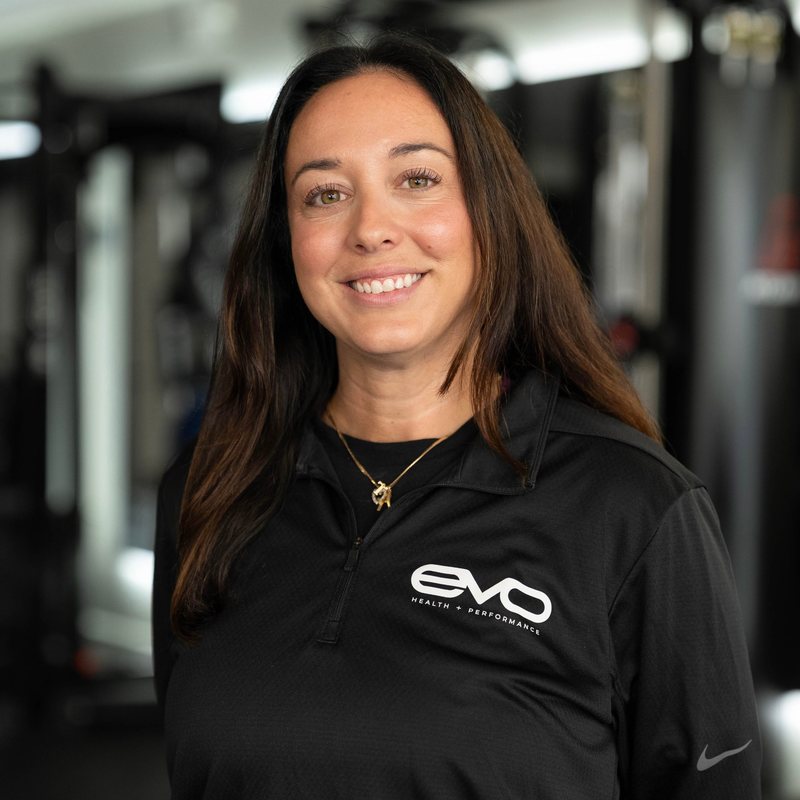
Taylor earned her Doctor of Physical Therapy degree from the University of Rhode Island, then completed an Orthopedic Physical Therapy Residency through Thomas Jefferson University, earning her Board-Certified Orthopaedic Clinical Specialist designation. She holds additional certification in dry needling and is a Certified Strength and Conditioning Specialist.
Both halves of that matter here. The certification covers where a needle goes and how to place it safely. The residency is what tells us which of the two mechanisms we are after on a given day, and what has to get stronger once we have the window.
“He treats the root of the problem, he just does not bandaid the problem.”
“Noticed my performance and mobility change ever since I came in.”
“I came in with a couple different issues and he was able to help me and be pain-free.”
The needle is far thinner than one used for a blood draw and most people barely feel it go in. You may feel a brief twitch or cramp as the muscle responds, which is normal and expected, then a dull ache. Soreness for a day afterward is common and light bruising is possible.
No. Acupuncture comes from traditional Chinese medicine and works along meridians. Dry needling is a Western, anatomy-led technique aimed at a specific muscle your assessment pointed at. Nothing is injected, which is where the name comes from.
In most cases, no. New Jersey allows direct access to physical therapy, which means you can usually begin without seeing another provider first. Some insurance plans have their own requirements, and we will help you understand those before you start.
Yes, and you are encouraged to keep moving. If a session leaves you more sore than you expected, tell your clinician and the next one is adjusted.
There is no set course. Needling is used inside your plan when the assessment calls for it rather than booked as a block of appointments, so how often it comes up depends on what is limiting you and how you respond to it.
A licensed physical therapist with specific post-graduate certification in the technique. Not every clinic offers it and not every clinician is trained in it.
A complimentary discovery call to hear what is going on, what you have tried, and whether we are the right fit.
A full 60-to-90-minute assessment to establish your starting point and what needs attention first.
One-on-one treatment and a progressive plan built around the demands of your life.