Not enough force
The muscle cannot produce what the moment asks for. This is the one most people mean when they say weak, and it is the one strengthening answers.
Your pelvic floor is part of your movement system. We assess it that way, and build back to lifting, running and whatever else you have been working around.
Leaking when you cough or run. Heaviness at the end of a long day. Pain that nobody has explained. These are common, and common gets mistaken for normal. The two are not the same thing.
They are also not one problem. Incontinence, heaviness and prolapse, and pelvic pain are different presentations with different causes behind them. A plan built for one will not solve another, which is why the cause matters more than the label.
And the pelvic floor does not work alone. Your breathing, rib cage, hips and abdominal wall all shape what the pelvic floor can do. So the honest starting point is an evaluation that finds the cause, rather than a routine aimed at the symptom.
Think of your pelvic floor like a trampoline at the bottom of your pelvis. The muscles contract and ascend, relax and descend, and do both in response to what the rest of you is doing. They work with your diaphragm, abdominal wall, rib cage, spine and hips to manage pressure every time you breathe, cough, lift, squat or run.
So the useful question is not how much tension the muscle can produce. A pelvic floor that holds tension all the time is not working any better than one that cannot produce enough. What matters is whether the right thing happens at the right moment, and whether the system around the pelvic floor is sharing the work or covering for a gap.
When it cannot, your body does not stop moving. It still has to breathe, brace, walk and load, so something else adapts: how your rib cage moves, how your spine and pelvis are controlled, how your abdominal wall handles pressure. That is why this is rarely an isolated pelvic floor problem.
Pelvic floor dysfunction gets talked about as weakness. Sometimes it is. Often it is not, and the four problems below do not respond to the same plan.
The muscle cannot produce what the moment asks for. This is the one most people mean when they say weak, and it is the one strengthening answers.
It holds on and cannot let go. On the surface this can look identical to weakness, and it does not respond to the same plan.
The strength is there but it arrives late, or not at the moment pressure rises. Coordination, not capacity.
Fine at rest, fine walking, then nothing scales when you add weight, distance, speed or fatigue.
This is the reason a sheet of Kegels helps some people and does nothing for others. Working out which of the four you are dealing with is what the evaluation is for.
Urine with a cough, a sneeze, a run, a jump or a lift. Common, especially after childbirth, and not something you have to plan your life around.
A dragging or bearing-down feeling, often worse at the end of a long day or after time on your feet.
Pain with sitting, with intimacy, or deep in the hip that has not answered to treating the hip on its own.
Symptoms during pregnancy, recovery after delivery, and the return to exercise afterward. We build around where you are now rather than a standard timeline.
Everything is fine until you add weight, distance, speed or fatigue. That points at capacity rather than at the symptom itself.
Less talked about and just as common: sudden or frequent urges, trouble emptying fully, constipation and difficulty with bowel movements, symptoms associated with prolapse, and changes following abdominal or pelvic surgery. If you are planning your day around any of these, an evaluation is worth having.
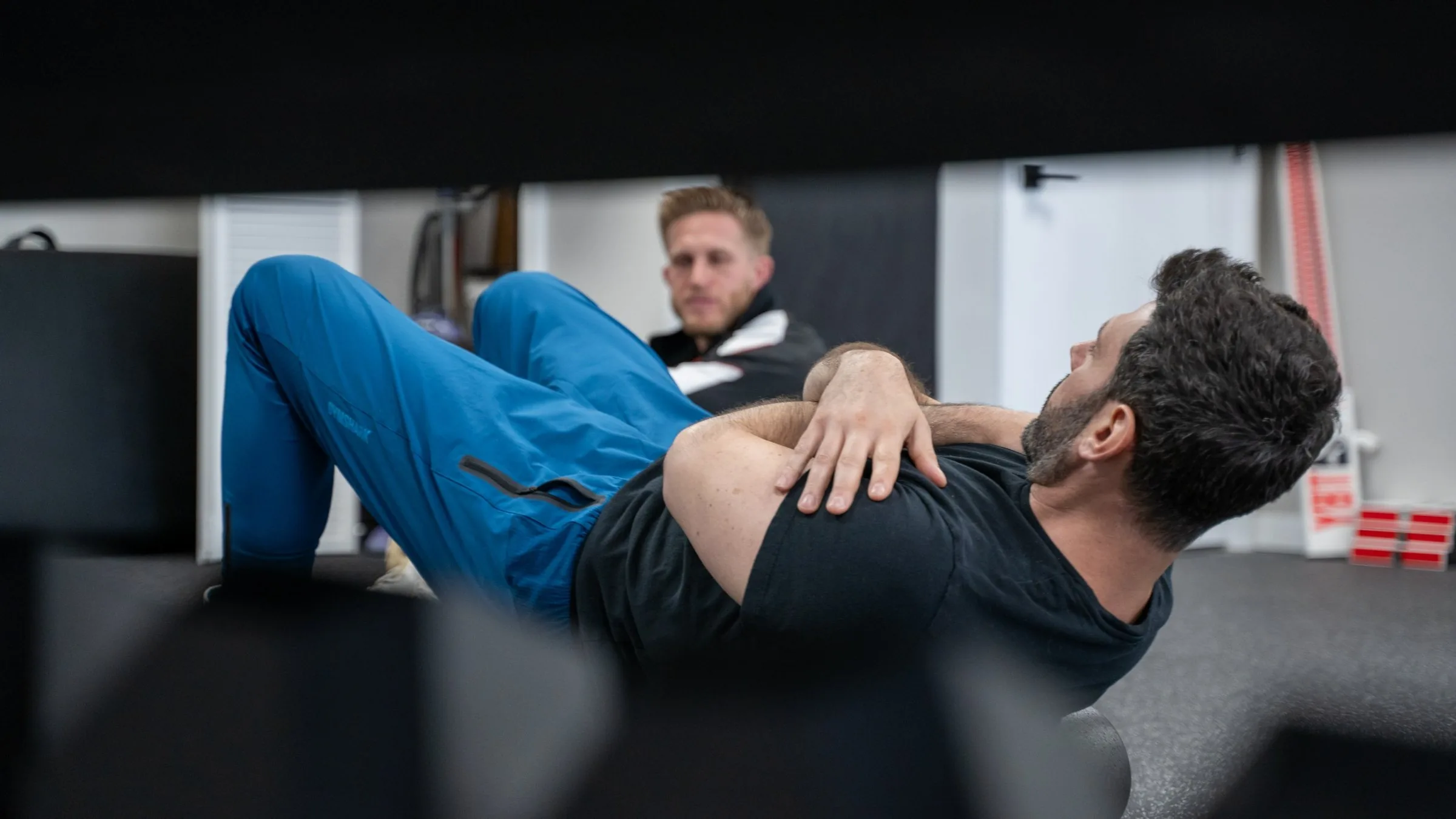
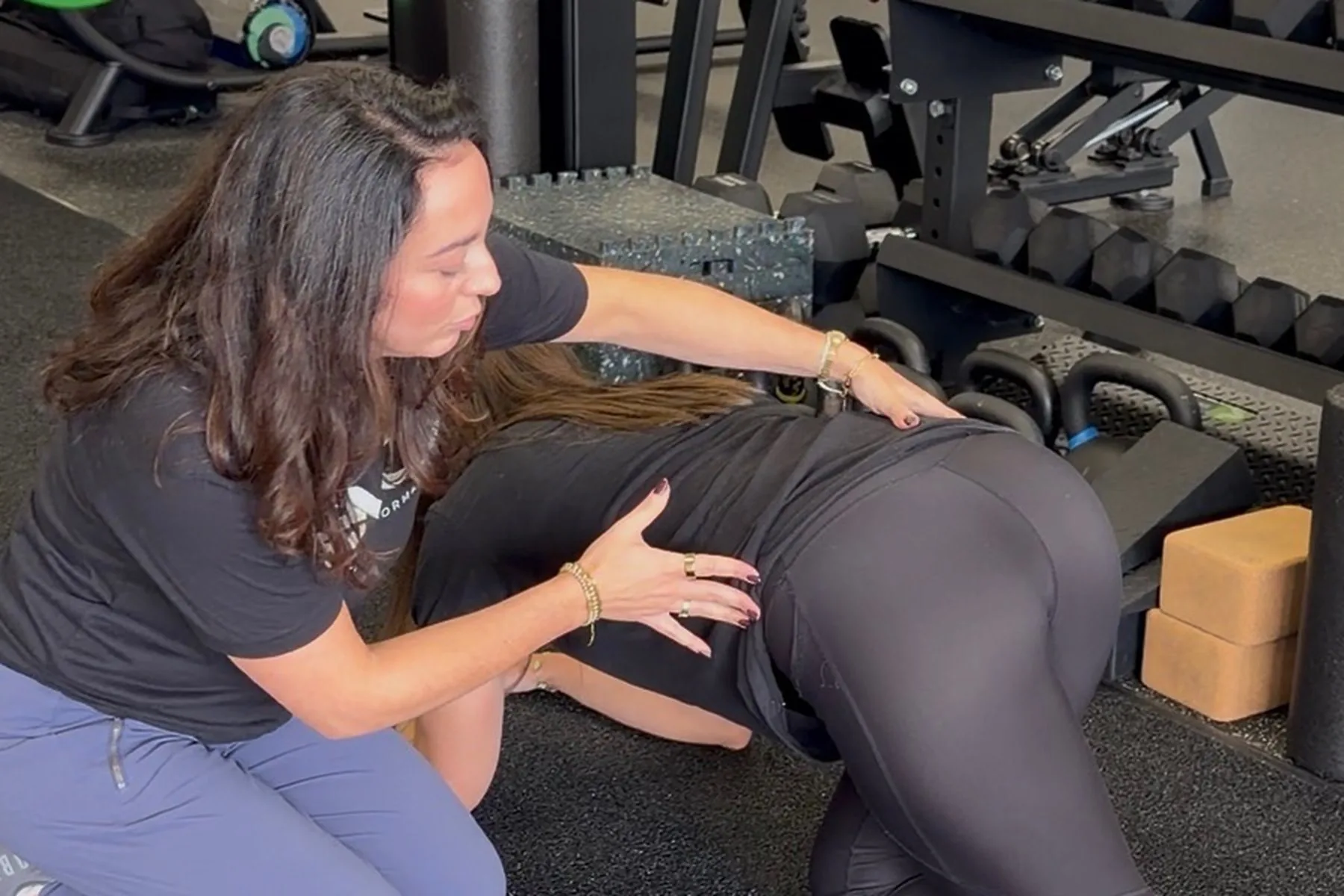
The evaluation starts with your history, your symptoms and what you want back. Then we look at how you breathe and manage pressure, how your rib cage, spine and pelvis work together, whether the pelvic floor can ascend and descend on demand, and what changes when we add complexity, repetitions, resistance, speed or fatigue.
We are not just looking for the symptom. We are trying to understand why your body is having difficulty managing the demand being placed on it, which is the same question we ask about a knee or a shoulder.
An internal pelvic floor examination is one source of information, and it is always your choice. It is explained first, consented to explicitly, and can be declined or deferred without changing the quality of your care. A great deal of useful work happens without it.
Nothing happens in a pelvic floor session that has not been explained and agreed to first. You can ask questions, pause, or stop at any point, and none of that changes the rest of your care.
Treatment begins by building control in positions where you can be successful, then making it harder. We borrow from the developmental sequence for that: control in supported positions first, then progressively more demand against gravity. Being able to coordinate your pelvic floor on a table is only useful if it transfers to real movement.
Once control is there we apply the same strength training principles we use throughout the 10-Step Recovery Process, progressing three variables: movement complexity, volume and intensity. You can hold pressure through a bodyweight squat. Now add weight. Now more reps. Now speed, fatigue, a lunge, a carry, a run.
Where that ends depends on you. Someone who wants to garden and keep up with their kids needs something different from someone returning to distance running or heavy deadlifts. We are not building a pelvic floor that works when you are lying down thinking about it. We are building one that works without your attention.
All of it happens inside one plan, run by one clinician, with hands-on work and dry needling available in your sessions when the assessment calls for them. Your pelvic floor and the rest of you do not get split across two referrals.
This is one of the better-evidenced things we do.
A Cochrane systematic review concluded that pelvic floor muscle training can cure or improve symptoms of stress urinary incontinence and of other types of incontinence in women, with side effects that were rare and minor in the trials reporting them.
Training the muscle works. What the review does not settle is the part we spend the most time on: getting that strength to show up automatically, at the right moment, under the load you actually want to carry.
Study located via the Cochrane Library.

Taylor earned her Doctor of Physical Therapy degree from the University of Rhode Island, then completed an Orthopedic Physical Therapy Residency through Thomas Jefferson University, earning her Board-Certified Orthopaedic Clinical Specialist designation. She is a Herman & Wallace Level 1 Certified Pelvic Floor Therapist and a Certified Strength and Conditioning Specialist.
Both parts of that matter here. Pelvic floor symptoms are rarely a pelvic floor problem on their own, so the person assessing your pressure management should also be the one who knows what your hips, spine and rib cage are doing about it.

“He proceeds methodically and explains what is happening (and why) every step of the way.”
“I went to several traditional PT places, but EVO’s route was the best for me. They found the root cause of my injury cycle. A few months later, I’m finally back to living life pain-free.”
“Every session feels purposeful and empowering, not rushed or cookie-cutter.”


No. An internal pelvic floor examination is one source of information and it is always your choice. It is explained first, consented to explicitly, and can be declined or deferred without changing the quality of your care. A great deal of useful work happens without it.
In most cases, no. New Jersey allows direct access to physical therapy, which means you can usually begin without seeing another provider first. Some insurance plans have their own requirements, and we will help you understand those before you start.
No. Kegels are one tool, not the plan. Depending on what the evaluation finds, treatment may involve breathing and pressure management, coordination, hip and trunk strengthening, mobility work and progressive loading, and sometimes learning to let the pelvic floor relax rather than contract.
Mostly talking and a movement assessment. Your history, your symptoms and what you want to get back to, then how you breathe, manage pressure, move and load, because the pelvic floor rarely works in isolation.
Usually yes, with adjustments. The point of the plan is to get you back to loading what you want to load, so we would rather modify what you are doing than stop it, unless your symptoms say otherwise.
Common, yes. Unavoidable, no. Pelvic floor muscle training has good evidence behind exactly this, which is why getting assessed beats planning around the symptom.
A complimentary discovery call to hear what is going on, what you have tried, and whether we are the right fit.
A full 60-to-90-minute assessment to establish your starting point and what needs attention first.
One-on-one treatment and a progressive plan built around the demands of your life.