Strength Training Does Not Have to Be Complicated
Walk into a gym and it can feel like there are a thousand different exercises you are supposed to know.
- Machines
- Dumbbells
- Cables
- Bands
- Barbells
- Online workouts
Random advice from someone who looks like they know what they are doing.
It can get overwhelming fast.
But strength training is simpler than it looks.
Underneath almost every exercise is one of five basic movement patterns:
- Squat
- Hinge
- Push
- Pull
- Carry
That is the framework behind the Start Strong program.
The goal is not to throw random exercises at you and hope something works.
The goal is to help you learn the fundamental ways your body moves, then build strength on top of that foundation.
Once you understand the patterns, the gym starts to make a lot more sense.
- Most strength exercises are built from five basic movement patterns: squat, hinge, push, pull, and carry.
- These patterns matter because they show up in real life. Training them helps you move better, feel stronger, and handle everyday demands with more confidence.
- You do not need endless exercises to build strength. Learn the main patterns first, and everything else becomes easier to understand.
Why We Train Patterns, Not Just Muscles
A lot of people think about strength training as individual muscles.
- Chest day
- Leg day
- Arms
- Abs
- Glutes
There is nothing wrong with understanding muscles, but your body does not move one muscle at a time.
It moves in patterns.
When you squat, your hips, knees, ankles, trunk, and feet all work together.
When you push, your chest, shoulders, arms, core, and shoulder blades all have to coordinate.
When you carry something heavy, your grip, posture, core, hips, and breathing all matter.
That is why we care about movement patterns.
They connect strength to real life.
You are not just getting better at a machine.
You are getting better at the movements you use every day.
The 5 Movement Patterns
1. The Squat
The squat is one of the most basic human movements.
It is the pattern of bending through your hips, knees, and ankles to lower your body down, then standing back up.
You use this pattern every time you sit into a chair, stand up from the couch, get in and out of the car, or lower yourself down to pick something up.
Common squat exercises include:
- TRX Supported squat
- Bodyweight squats
- Goblet squats
- Front squats
- Back squat
The squat mainly trains your quads, glutes, hips, and the muscles that support your knees.
But it is not just a leg exercise.
A good squat teaches your body how to control position, balance, and force through the lower body.
That matters for everything from stairs to sports to simply feeling more confident getting up and down from the floor.
2. The Hinge
The hinge is the pattern of bending at your hips while keeping your spine controlled.
Instead of dropping straight down like a squat, your hips move back.
This is the movement you use when you pick something up from the floor, reach for a laundry basket, lift a child, grab a suitcase, or move a heavy box.
Common hinge exercises include:
- Glute bridge
- Hip Thrust
- Hip hinges
- Kettlebell Deadlifts
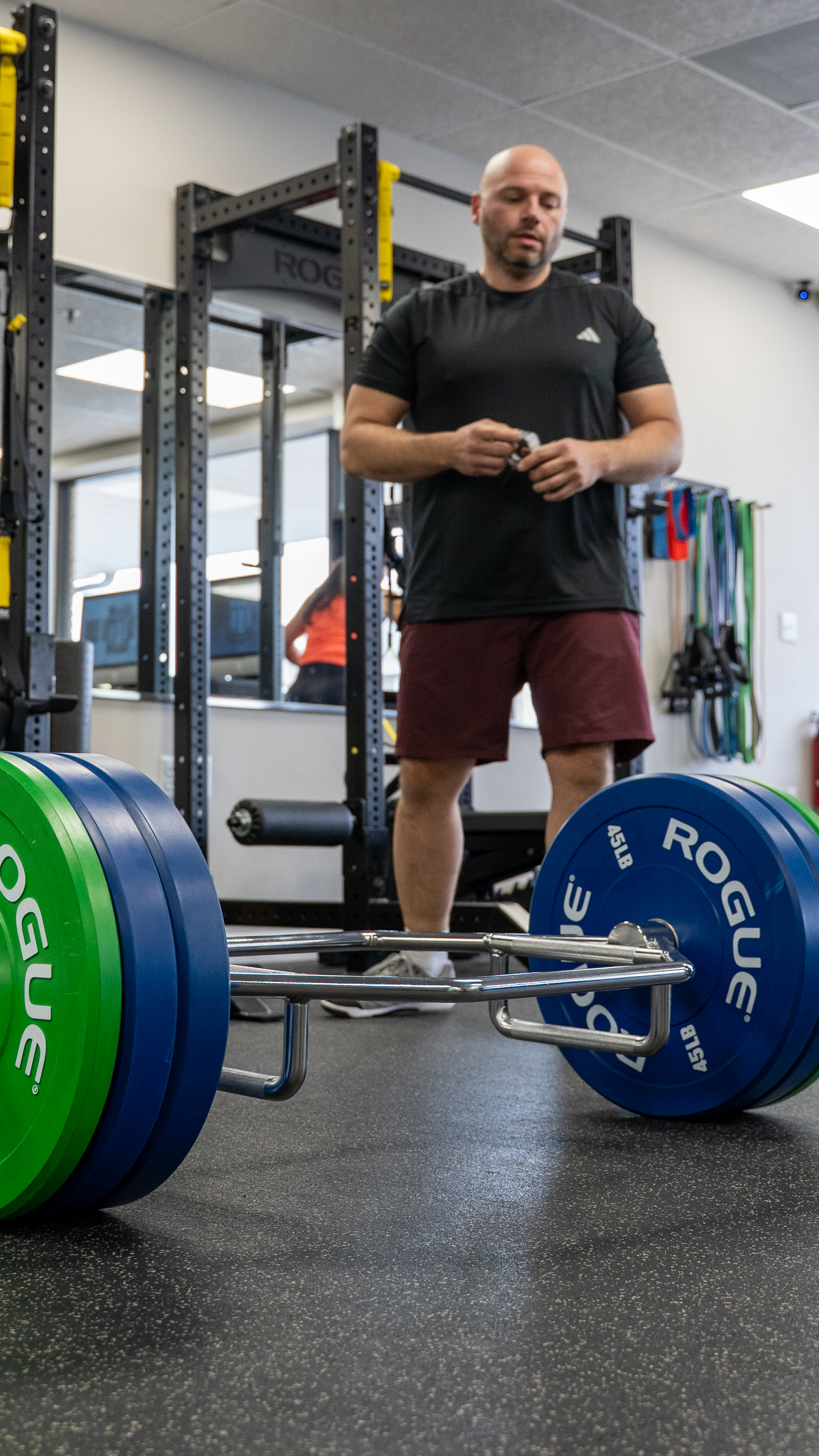
- Trap Bar Deadlifts
- Barbell Deadlifts
The hinge trains your glutes, hamstrings, hips, and the muscles along the back side of your body.
For a lot of beginners, this is one of the most important patterns to learn.
Not because everyone needs to deadlift heavy.
Because learning how to hinge well teaches you how to use your hips instead of constantly asking your lower back to do all the work.
That is a big deal.
3. The Push
The push pattern is exactly what it sounds like.
It is the ability to press something away from your body.
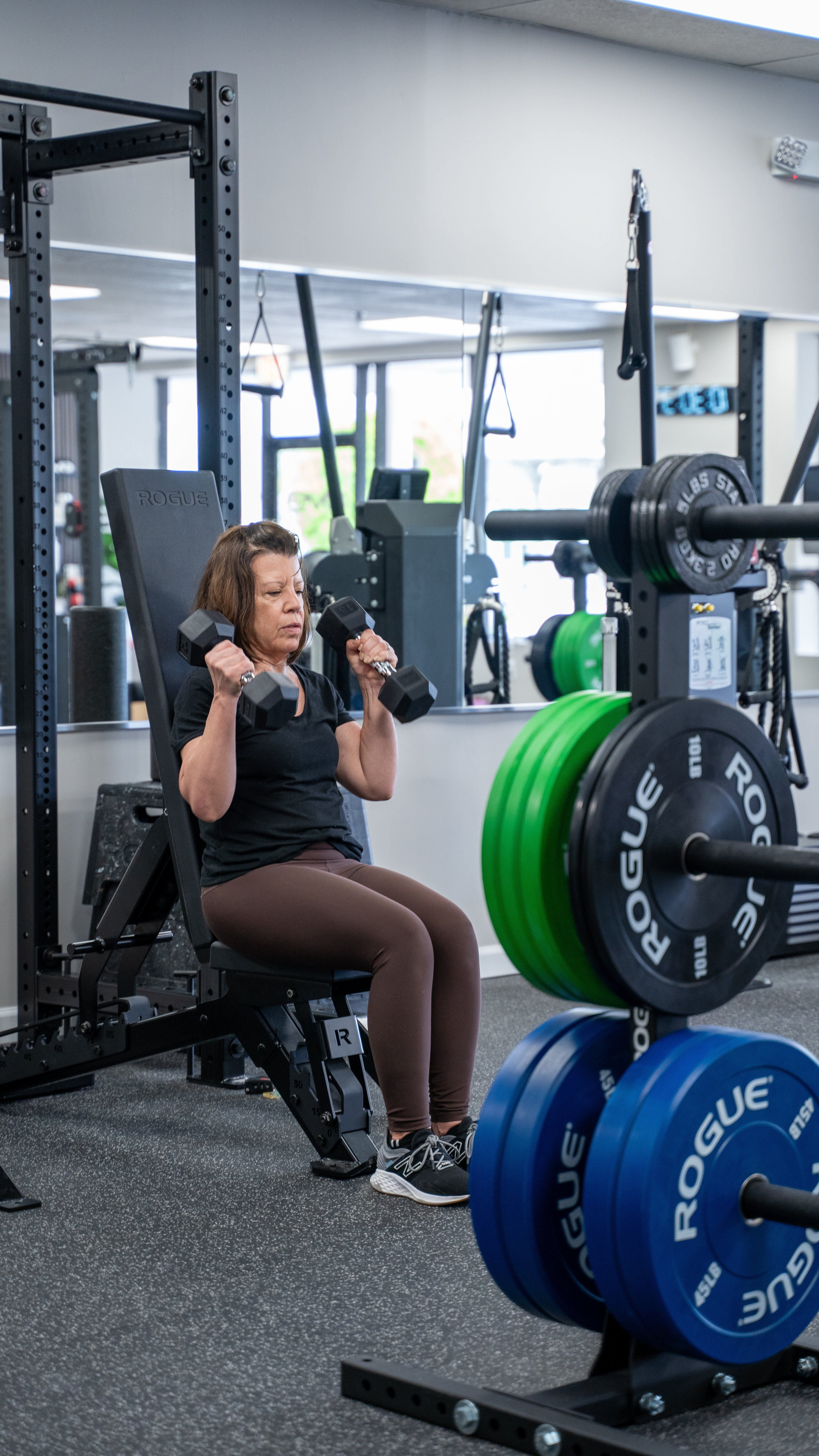
That could be pushing forward, like a push-up or chest press.
It could also be pushing overhead, like putting a suitcase into an overhead bin or reaching something onto a high shelf.
Common push exercises include:
- Machine Chest Press
- Dumbbell Chest Presses
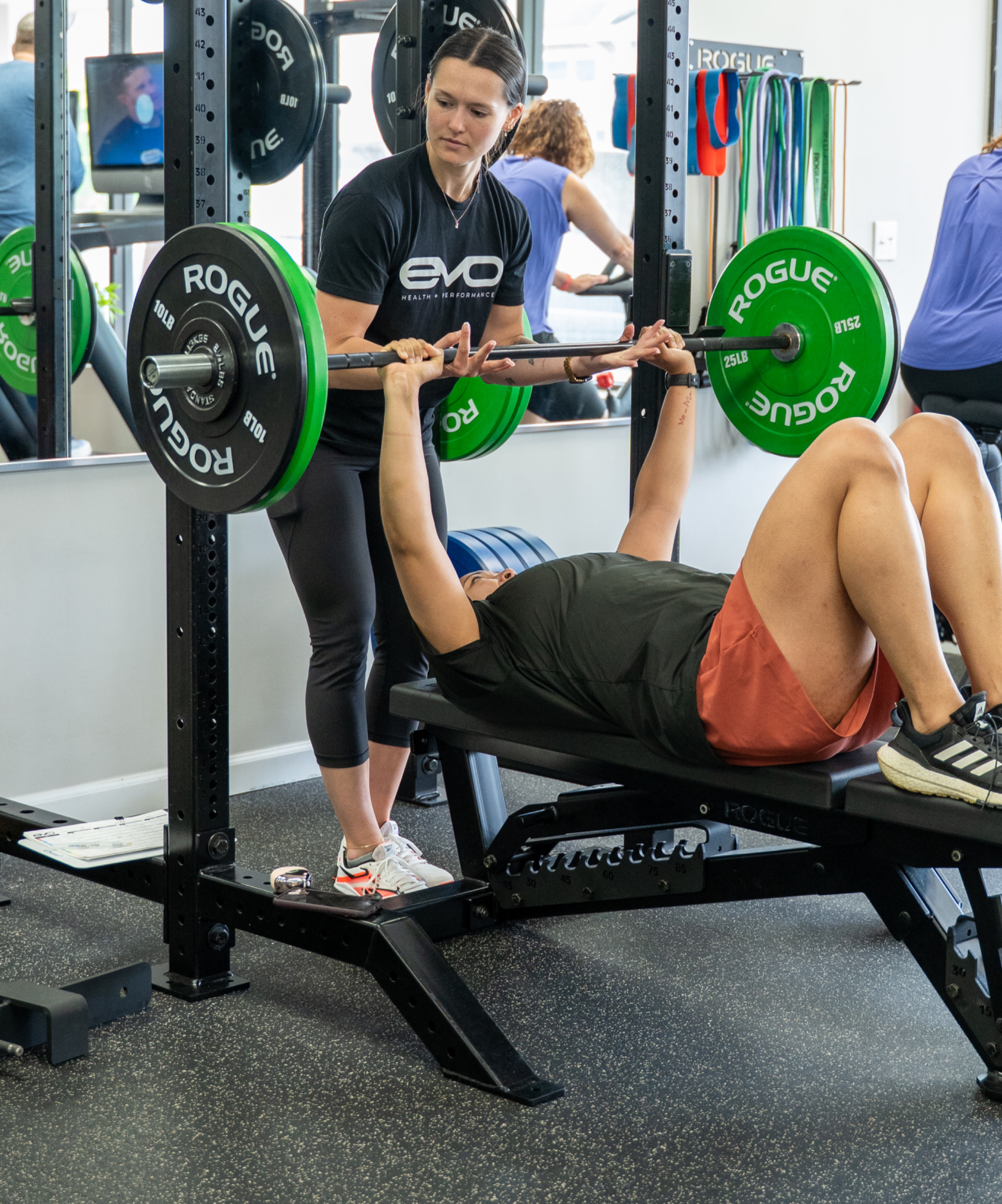
- Bench Press
The push pattern trains your chest, shoulders, triceps, and the muscles that help control your shoulder blades.
You use this pattern when you push open a heavy door, get up from the floor, move furniture, or press something overhead.
A strong push is not just about upper-body strength.
It also teaches your body how to create tension, stabilize your trunk, and move your shoulders with control.
4. The Pull
The pull pattern is the opposite of the push.
It is the ability to draw something toward you.
You use it when you pull open a door, grab something heavy, pull yourself up, row
something toward your body, or control a weight while carrying and lifting.
Common pull exercises include:
- Band rows
- Cable rows
- Dumbbell Rows
- Lat pulldowns
- Pull-ups
The pull pattern trains your upper back, lats, rear shoulders, biceps, grip, and posture muscles.
Pulling exercises help balance that out by strengthening the muscles of your back and improving control around your shoulders.
If you want better posture and stronger shoulders, pulling needs to be part of the plan.
5. The Carry
The carry might be the simplest pattern, but it is also one of the most useful.
Pick something up.
Hold your body steady.
Walk.
That is it.
Common carry exercises include:
- Farmer carries
- Suitcase carries
- Front rack carries
- Goblet carries
- Sandbag carries
You use this pattern every time you carry groceries, luggage, a car seat, water jugs, gym bags, or anything heavy from one place to another.
Carries train your grip, core, hips, posture, breathing, and whole-body stability.
They teach your body how to stay strong under load.
That is why carries are so valuable.
They look simple, but they build the kind of strength you actually use.
How These Patterns Fit Together
A good beginner strength program does not need dozens of exercises.
It needs to cover the basics well.
That means your week should include some version of:
- A squat
- A hinge
- A push
- A pull
- A carry or core stability exercise
That combination trains your whole body in a balanced way.
It also makes your workouts easier to understand.
Instead of wondering why you are doing a specific exercise, you can start asking:
What pattern am I training?
Is this a squat?
Is this a hinge?
Is this a push?
Is this a pull?
Is this helping me carry or stabilize better?
That simple shift changes everything.
Your workout stops feeling random.
You start to understand the purpose behind the plan.
Whatever's been holding you back, we take the time to understand the whole picture and build a plan around you. A discovery call is a no-pressure place to start.
Book a Free Discovery Call →What This Means During Start Strong
As you move through Start Strong, pay attention to the pattern behind each exercise.
You do not need to master everything immediately.
You do not need perfect form on day one.
But you should start noticing the difference between a squat and a hinge, a push and a pull, a movement that feels controlled and one that feels rushed.
That awareness matters.
Because the goal is not just to get through the workout.
The goal is to learn how to move better, build strength safely, and create a foundation you can keep using long after the program ends.
Master these five patterns, and you will understand the majority of what you do in the gym.
Everything else is just a variation.
Your Next Step
This week, do not worry about knowing every exercise name.
Focus on the pattern.
Learn how your body moves.
Build control.
Ask yourself what each exercise is teaching you.
That is how you start turning workouts into real strength.
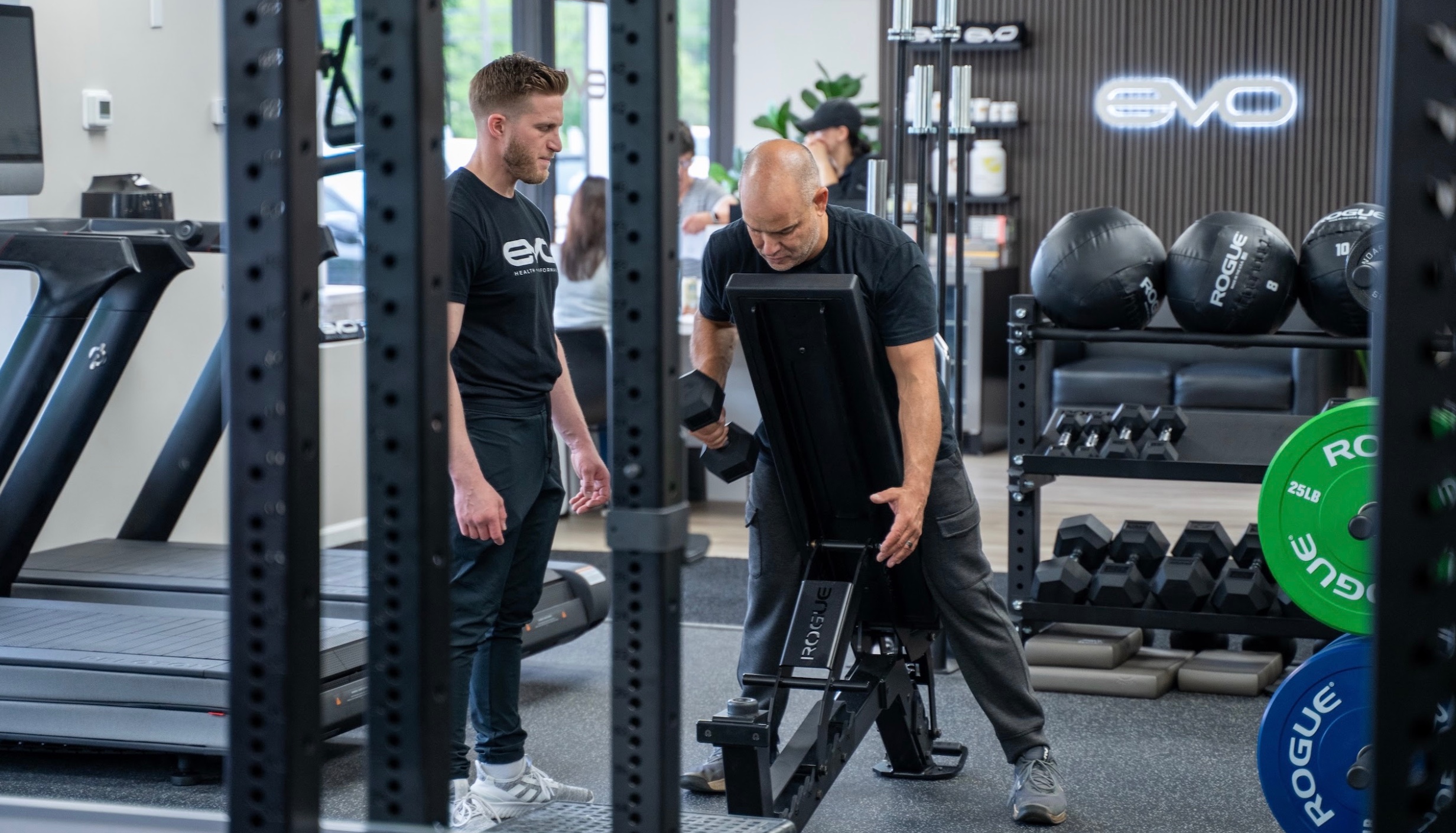
If you want help learning these patterns, checking your form, or building a plan around your goals and limitations, our team at EVO Health + Performance can help.
A Freehold personal trainer can help you learn the fundamentals, build confidence, and make sure the strength you are building actually carries over to real life.